
My Unforgettable Incheon Adventure: A Tourist’s Guide to South Korea’s Hidden Gem!
My Unforgettable Incheon Adventure: A Tourist’s Guide to South Korea’s Hidden Gem!
Many travelers only know Инчхон (Incheon) as the gateway to South Korea, home to one of the world’s best airports. But let me tell you, Incheon is so much more! It’s a vibrant city brimming with history, modern marvels, delicious food, and beautiful coastal escapes. I recently had the most fantastic time exploring this dynamic city, and I’m here to share all the details you need for your ideal Incheon adventure!
✈️ Getting There & Around: Seamless Transfers & City Navigation
One of the best things about Incheon is its incredible accessibility. Navigating the city and getting to it from Seoul is a breeze!
- From Incheon International Airport (ICN): You’re already there! To get to downtown Incheon or Seoul, the AREX (Airport Railroad Express) is your best friend.
- AREX Express Train (to Seoul Station): (~9,500 KRW / ~7.50 USD) — Non-stop, about 43 minutes. Perfect if you’re heading straight to Seoul.
- AREX All Stop Train (to Seoul/Incheon City): (~4,150 KRW to Seoul Station / ~1,250-3,000 KRW within Incheon depending on destination) — Stops at various stations including Geomam (transfer to Incheon Subway Line 2), Unseo (for nearby hotels), and Incheon Subway Line 1 stations. An affordable and convenient option.
- Subway & Buses: Incheon has an excellent subway system (Incheon Subway Lines 1 & 2) and an extensive bus network. I highly recommend getting a T-Money card (available at convenience stores like GS25, CU) for easy tap-and-go travel. Basic fare starts around 1,250 KRW (~1 USD) for buses/subways.
- Taxis: Readily available, but more expensive. A typical ride within Incheon city might range from 10,000-25,000 KRW (~8-20 USD).
🏛️ A Walk Through History: Incheon’s Rich Past
Incheon played a pivotal role in Korean history, and its historical sites are well-preserved and fascinating.
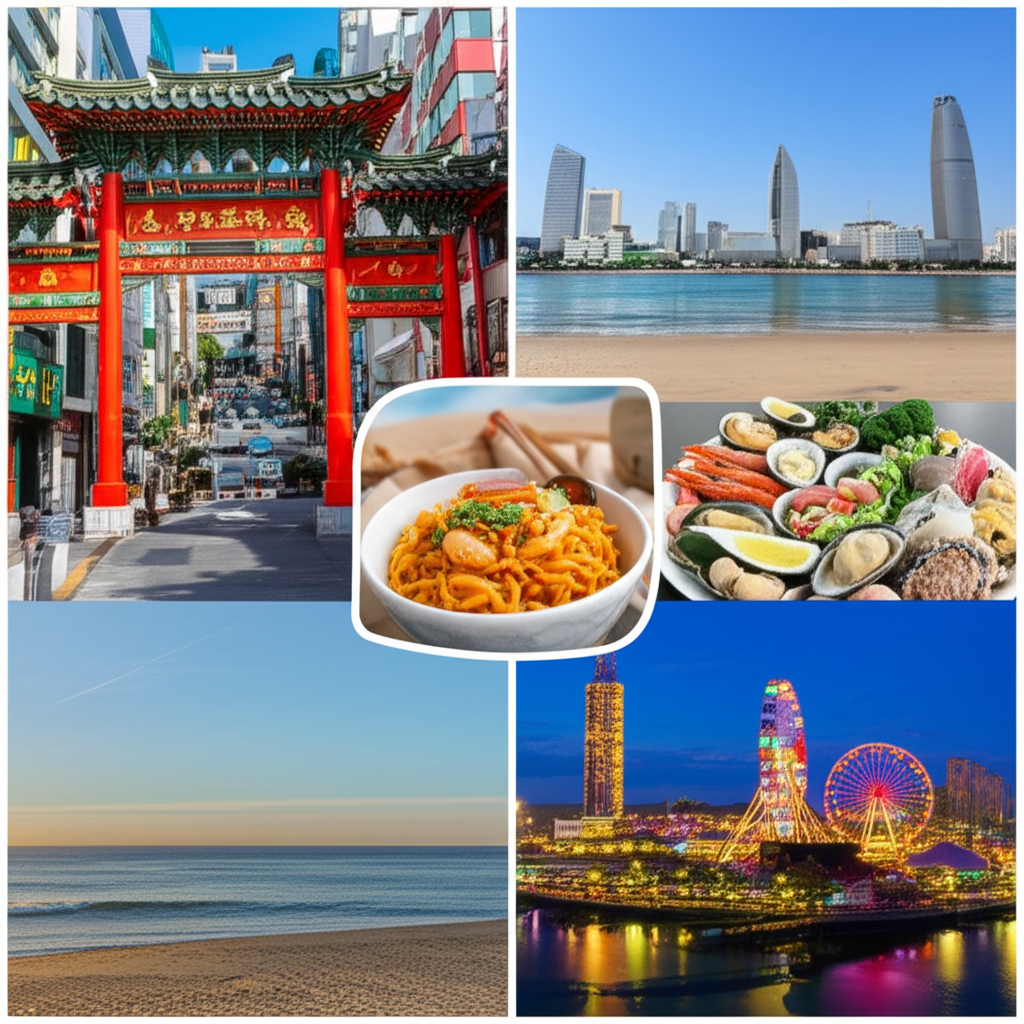
- Incheon Chinatown: (Free to enter) — The only official Chinatown in Korea, established in 1883. It’s a colorful, bustling area with unique architecture, delicious food, and vibrant street art. Don’t miss the 짜장면 (Jajangmyeon) here – it’s legendary!
- Jayu Park (Freedom Park): (Free) — Located atop a hill next to Chinatown, offering panoramic views of Incheon Port. It’s home to the iconic statue of General Douglas MacArthur, commemorating the Incheon Landing. A beautiful spot for a leisurely stroll, especially in spring.
- Incheon Open Port Area: (Free to explore) — Wander through the streets near Chinatown to discover beautifully preserved Japanese and Western-style buildings from the late 19th and early 20th centuries. It feels like stepping back in time.
- Incheon Landing Operation Memorial Hall: (Free entry) — A respectful and informative museum detailing the crucial 1950 Incheon Landing during the Korean War. A must-visit for history buffs.
- Incheon Art Platform: (Free entry to explore, some exhibitions may charge) — A cultural complex housed in renovated warehouses from the Open Port era. It features galleries, performance spaces, and a fantastic artistic atmosphere.
🖼️ Museums & Cultural Spots: Dive Deeper
- Songdo Tri-bowl: (Free to admire from outside, occasional exhibitions inside free/small fee) — A stunning, futuristic architectural marvel in Songdo Central Park, resembling three inverted bowls. It’s a popular spot for photos and cultural events.
- National Institute of Biological Resources (NIBR): (Free entry) — If you’re into nature and science, this museum showcases Korea’s diverse biological heritage.
- Sudoguksan Museum of Housing and Living: (~1,000 KRW / ~0.80 USD) — Offers a nostalgic look into the lives of ordinary people in Incheon during the 1960s and 70s, with incredibly detailed dioramas.
🏖️ Beaches & Relaxation: Coastal Escapes
Incheon’s islands offer some lovely beaches, perfect for a day trip or a relaxing afternoon.
- Eurwangni Beach (을왕리해수욕장): (Free entry) — One of Incheon’s most popular beaches, known for its soft sand, shallow waters (great for families), and stunning sunsets. Many seafood restaurants line the shore. Easily accessible by local bus from Incheon International Airport.
- Wangsan Beach (왕산해수욕장): (Free entry) — Adjacent to Eurwangni, it offers a quieter, more serene experience with equally beautiful scenery.
- Masian Beach (마시안해변): (Free entry) — Known for its unique tidal flats, it’s a great spot for clam digging during low tide and enjoying the sunset.
🎉 Nightlife & Entertainment: After Dark Fun
While not as wild as Seoul’s Itaewon or Hongdae, Incheon has its own vibrant nightlife, particularly in certain districts.
- Guwol-dong (구월동): This is Incheon’s main downtown area, bustling with shops, restaurants, cafes, and a plethora of bars and pubs. You’ll find everything from lively Hofs (beer halls) to trendy cocktail bars. Most bars don’t have a cover charge, drinks range from 5,000-15,000 KRW (~4-12 USD).
- Bupyeong (부평): Another popular commercial and entertainment district, especially favored by a younger crowd. Similar to Guwol-dong, it offers a wide selection of bars, karaoke rooms (noraebang ~15,000-30,000 KRW per hour), and casual eateries.
- Wolmido Theme Park: (Free entry, rides 5,000-8,000 KRW / ~4-6.50 USD each) — While not a ‘club,’ Wolmido comes alive at night with its amusement park rides (the ‘Disco Pang Pang’ is famous!), street performers, and a lively atmosphere. It’s a fun, family-friendly night out with great views of the sea.
🍲 Culinary Delights: What to Eat & Where
Prepare your taste buds, because Incheon’s food scene is incredible!
- Jajangmyeon (짜장면): A must-try, especially in Chinatown. This savory black bean noodle dish was invented here. Expect to pay around 7,000-10,000 KRW (~5.50-8 USD) per bowl.
- Seafood: Being a port city, fresh seafood is abundant. Head to Sorae Pogu Fish Market for a truly authentic experience. You can buy fresh seafood and have it prepared on the spot at nearby restaurants. Prices vary widely based on your selection, but a shared seafood platter could be 30,000-80,000 KRW (~25-65 USD).
- Street Food: Around major subway stations and tourist spots like Chinatown and Wolmido, you’ll find classic Korean street food like Tteokbokki, Odeng, Gyeranppang, and Hotteok. Most items are 3,000-6,000 KRW (~2.50-5 USD).
- Traditional Korean Restaurants: Everywhere in Incheon, you’ll find restaurants serving Korean BBQ, Bibimbap, Kimchi Jjigae, etc. A typical meal at a mid-range restaurant is 10,000-25,000 KRW (~8-20 USD) per person.
- Cafes: Incheon, especially areas like Songdo and the Open Port Area, has charming and stylish cafes perfect for a coffee break or dessert. Coffee prices are typically 4,000-7,000 KRW (~3.50-6 USD).
🏨 Accommodation: Where to Stay
Incheon offers a range of accommodation options to suit every budget:
- Budget Hostels/Guesthouses: (~20,000-40,000 KRW / ~16-32 USD per night) — Found around major transportation hubs and tourist areas.
- Mid-range Hotels: (~70,000-150,000 KRW / ~55-120 USD per night) — Plenty of options in downtown Guwol-dong, Bupyeong, or near the airport.
- Luxury Hotels: (~150,000+ KRW / ~120+ USD per night) — Concentrated in Songdo International City and near Incheon International Airport (e.g., Grand Hyatt, Paradise City).
💡 Tips for an Ideal Incheon Travel Time:
- Get a T-Money Card: Essential for public transport.
- Download Naver Map or KakaoMap: Google Maps isn’t as accurate in Korea. These local apps are invaluable.
- Comfortable Shoes: You’ll do a lot of walking, especially exploring historical sites and parks.
- Learn Basic Korean Phrases: While many speak English in tourist areas, a few basic phrases (hello, thank you, excuse me) go a long way.
- Visit During Spring (April-May) or Autumn (September-October): The weather is pleasant, and the scenery is beautiful.
- Don’t Forget the Wifi: Public Wi-Fi is good, but consider a local SIM or portable Wi-Fi egg for constant connectivity.
Incheon truly surprised me with its diverse offerings. It’s a city that seamlessly blends its rich historical past with a modern, futuristic vision. From savoring delicious Jajangmyeon in Chinatown to unwinding on beautiful beaches and exploring cutting-edge architecture in Songdo, Incheon offers an unforgettable travel experience for every kind of tourist. Don’t just pass through; stay and discover the magic of Инчхон!
WordPress Tags: Incheon, South Korea, Korea travel, Incheon travel guide, Korean history, Chinatown, Jayu Park, Songdo, Eurwangni Beach, Korean food, Jajangmyeon, travel review, tourist guide, travel tips, things to do Incheon, nightlife Incheon, museums Incheon, AREX, T-Money, Korean culture