
Guayaquil: The Pearl of the Pacific — An Unforgettable Adventure!
Guayaquil: The Pearl of the Pacific — An Unforgettable Adventure!
Stepping into Guayaquil, Ecuador’s largest city and economic powerhouse, was like diving headfirst into a vibrant tapestry of history, culture, and undeniable energy! Often overlooked by tourists heading straight for the Galapagos or the Andes, I discovered ‘The Pearl of the Pacific’ is a captivating destination in its own right. From its stunning riverfront to its charming historic hills, Guayaquil offers an authentic Ecuadorian urban experience that I highly recommend. Here’s my detailed review and guide to help you plan your ideal trip!
Getting Around Guayaquil: Smooth Transfers & City Navigation
- Airport Transfer: My journey began at the modern José Joaquín de Olmedo International Airport (GYE), which is conveniently close to the city center. I opted for an official yellow taxi right outside the terminal, and the ride to my downtown hotel was quick, costing around $7-10 USD. Ride-sharing apps like Uber and Cabify are also readily available and offer similar pricing and convenience.
- Local Transport: Navigating Guayaquil is surprisingly easy. For most of my city excursions, I relied on taxis or ride-sharing apps, with average rides costing $3-8 USD. Always confirm the fare or ensure the meter is running. The Metrovía (Bus Rapid Transit) system is excellent for specific routes; you’ll need a Metrovía card (initial cost ~$2 USD, then top up for $0.30 USD per ride). It’s efficient during the day, but I preferred taxis for evening travel.
Where to Stay: Options for Every Budget
Guayaquil offers a range of accommodations. I stayed in a mid-range hotel near Malecón 2000 for convenience. You can find:
- Hostels: Ideal for budget travelers, starting from $15-30 USD per night.
- Mid-range Hotels: Comfortable options with good amenities, typically $40-80 USD per night.
- Luxury Hotels: For those seeking premium services and views, expect to pay $100+ USD per night.
Must-See Historical Sites & Museums: A Journey Through Time
Guayaquil is rich in history and culture. Here are the highlights:
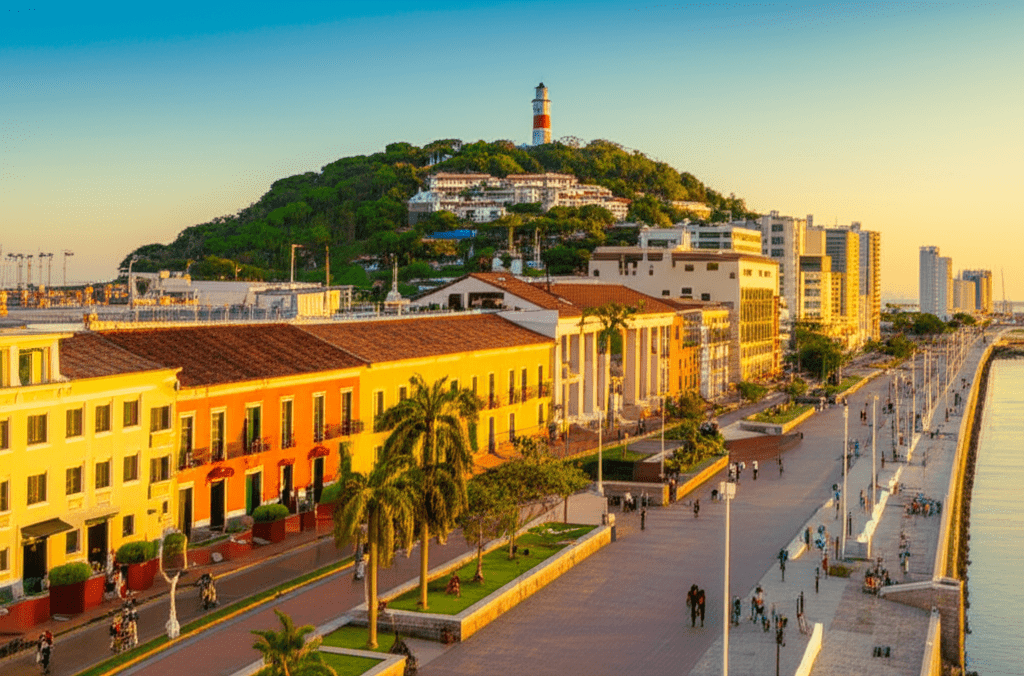
- Malecón 2000: This iconic riverfront promenade is a masterpiece of urban renewal and a must-visit. It’s free to enter and stretches for 2.5 km along the Guayas River. I spent an entire afternoon exploring its beautiful gardens, monuments (like La Rotonda), playgrounds, shops, and restaurants. There’s even an IMAX theater!
- Las Peñas & Santa Ana Hill: This is arguably the city’s most charming and historic neighborhood. I loved climbing the 444 vibrant, colorful steps of Santa Ana Hill. Each step reveals quaint houses, art galleries, and small cafes. At the summit, you’re rewarded with breathtaking panoramic views from the Santa Ana Lighthouse and a small chapel. Walking around is free; entry to the lighthouse itself is sometimes a nominal fee, but often free (check local signage).
- Parque de las Iguanas (Seminario Park): A truly unique experience! This downtown park is home to hundreds of land iguanas that roam freely, often resting on benches or climbing trees. It’s an incredible photo opportunity and completely free to visit.
- Museo Antropológico y de Arte Contemporáneo (MAAC): Located on the Malecón, this modern museum showcases Ecuadorian art and fascinating archaeological artifacts. Entry fee is usually around $2-3 USD.
- Museo Municipal de Guayaquil: For a deeper dive into the city’s history, this museum is a great stop. Entry fee typically $1-2 USD.
- Palacio de Cristal: A beautiful iron and glass structure, once a market, now used for cultural events. Worth admiring its architecture from the outside (free).
Taste of Guayaquil: Food & Restaurants
Ecuadorian cuisine in Guayaquil is a delight, especially the seafood!
- Local Delights: You HAVE to try Encebollado, a hearty fish stew often eaten for breakfast – it’s the city’s signature dish! Other favorites include Bolones de verde (fried plantain balls, often with cheese or pork) and Cazuela de Mariscos (seafood casserole).
- Street Food & Local Eateries: For an authentic and budget-friendly experience, look for ‘Almuerzos’ (set lunch menus) at local restaurants. These typically include soup, a main course, and a drink for just $3-7 USD.
- Mid-range Restaurants: For excellent seafood, I recommend places like El Caracol Azul or La Pata Gorda. Expect to pay around $10-25 USD per meal.
- Higher-end Dining: For a special evening, restaurants along Malecón 2000 like Río Grande offer great food with river views. Prices here can range from $30-60+ USD per meal.
Beyond the City: Nearby Beaches
While Guayaquil itself isn’t a beach city, beautiful Pacific coastlines are just a short trip away:
- Salinas: A popular resort town known for its beaches and lively atmosphere. A bus ride takes about 1.5-2 hours and costs approximately $3-5 USD one-way. Perfect for a day trip or an overnight stay.
- Playas (General Villamil): Closer and often a bit more local, Playas is another great option for a beach escape, about 1-1.5 hours by bus for $2-4 USD one-way.
Guayaquil After Dark: Nightlife & Clubs
Guayaquil comes alive at night! You’ll find options for every mood:
- Urdesa: This district is known for its trendy bars, pubs, and restaurants. It’s a great area for a sophisticated evening out. Expect drinks to cost around $5-12 USD.
- Las Peñas: The bars nestled on the steps of Santa Ana Hill offer a more bohemian and historic vibe. Many have live music, and drinks typically range from $4-10 USD. It’s a unique setting for a nightcap.
- Clubs: Guayaquil has various clubs, especially in Urdesa and along Samborondón (a more upscale area outside the city center). Entry can be free or cost $5-15 USD for special events or popular nights.
Practical Tips & Budget for Your Trip
- Safety: Like any large city, it’s wise to be aware of your surroundings, especially at night. Use official taxis or ride-sharing apps, and keep valuables out of sight.
- Language: Spanish is the official language. While some people in tourist areas might speak English, having a few basic Spanish phrases will greatly enhance your experience.
- Currency: The official currency of Ecuador is the US Dollar (USD).
- Best Time to Visit: The dry season, from May to December, offers more pleasant weather for exploring.
- Estimated Daily Budget (per person):
- Budget Traveler: $30-50 USD (hostel, local food, public transport, free attractions).
- Mid-range Traveler: $60-100 USD (mid-range hotel, varied food, some taxis, paid attractions).
- Luxury Traveler: $120+ USD (high-end hotel, fine dining, private transport, tours).
Final Thoughts
My trip to Guayaquil was an absolute highlight! This city, often a gateway to other Ecuadorian wonders, deserves much more credit as a standalone destination. Its warmth, vibrancy, rich history, and incredible food left a lasting impression. Don’t just pass through; take the time to explore the ‘Pearl of the Pacific’ – you won’t regret it!