
Rabat: Morocco’s Underrated Gem – My Perfect Journey Guide!
Forget Marrakech for a moment and let me introduce you to Rabat, Morocco’s elegant capital. My recent trip there was an absolute revelation – a city where ancient history meets modern charm, all without the overwhelming hustle of other tourist hotspots. If you’re planning a Moroccan adventure, make sure Rabat is on your itinerary. Here’s my detailed guide to making your trip as ideal as mine!
Historical Places & Culture
Rabat offers a fascinating journey through time, with stunning architecture and rich stories at every corner.
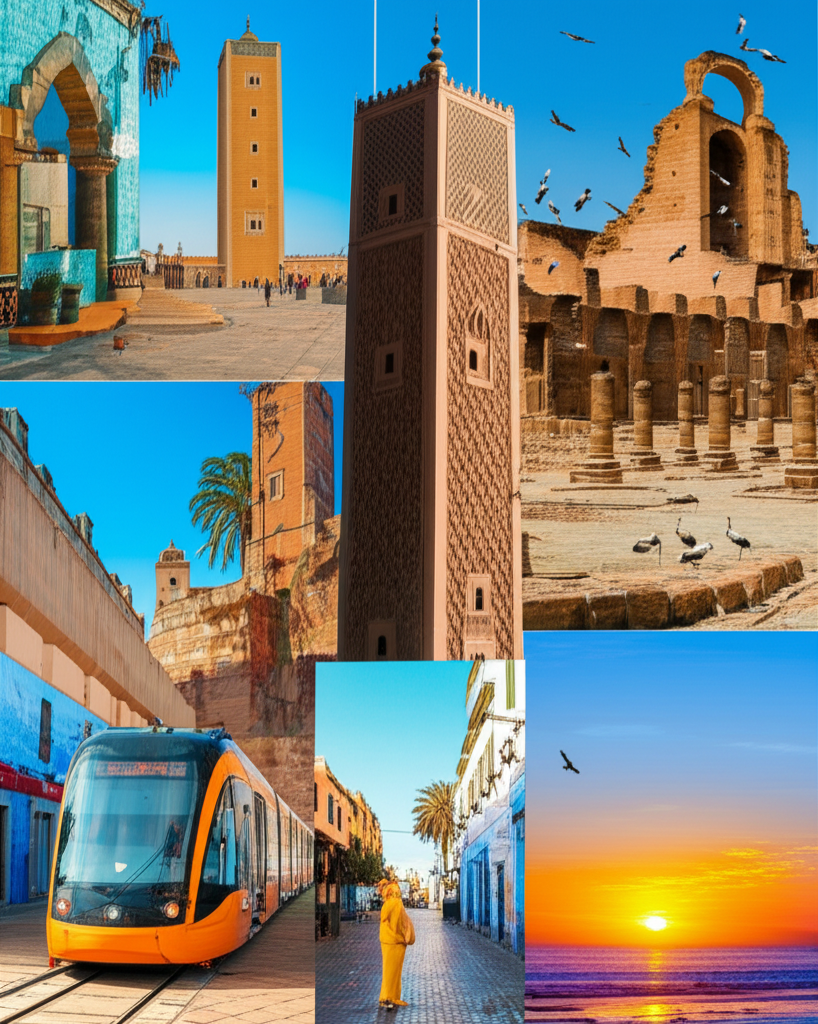
- Kasbah of the Udayas: Stepping into the Kasbah felt like entering a different world. Its iconic blue and white alleys, reminiscent of Chefchaouen, lead you through a labyrinth of history. Don’t miss the tranquil Andalusian Gardens – perfect for a peaceful stroll. The views over the Bou Regreg river and the Atlantic are breathtaking.
- Chellah Necropolis: This UNESCO World Heritage site is pure magic. Roman ruins stand gracefully alongside ancient Islamic tombs, all watched over by a colony of storks nesting high on the minarets. It’s a serene, almost spiritual place, and absolutely stunning at sunset. Give yourself at least 1.5-2 hours here.
- Hassan Tower & Mausoleum of Mohammed V: These two iconic landmarks stand as a testament to Morocco’s rich past and present. The unfinished Hassan Tower, a minaret from a 12th-century mosque, is grand. Beside it, the opulent Mausoleum of Mohammed V, housing the tombs of the current king’s grandfather and father, is a masterpiece of Moroccan artistry. It’s free to enter, but dress respectfully.
- Royal Palace (Dar al-Makhzen): While you can’t go inside, the exterior of the Royal Palace is impressive, especially with its grand gates. It’s a short taxi ride, and you can admire the exquisite architecture from outside.
Museums
Delve deeper into Moroccan art and history.
- Mohammed VI Museum of Modern and Contemporary Art (MMVI): A modern architectural marvel itself, the MMVI houses a fantastic collection of Moroccan and international contemporary art. It’s a refreshing contrast to the historical sites. (Entry: ~60 MAD / €6)
- Rabat Archaeological Museum: For history buffs, this museum provides an excellent overview of Morocco’s ancient past, featuring artifacts from the Phoenician, Roman, and Islamic periods. (Entry: ~20 MAD / €2)
Beaches & Relaxation
Rabat offers beautiful coastline for both activity and relaxation.
- Rabat Beach: Right in the city, this expansive sandy beach is popular with locals for strolling, surfing, and relaxing. It’s a great spot to catch a sunset or watch surfers ride the waves. You can rent chairs and umbrellas.
- Plage des Nations (Skhirat): About a 30-minute drive south, Plage des Nations offers a more upscale beach experience, popular for surfing and kite-surfing. It’s generally cleaner and has more facilities, including beach clubs.
Culinary Delights (Restaurants & Prices)
Rabat’s food scene is delightful, offering everything from authentic Moroccan street food to elegant fine dining.
- Budget-Friendly (€3-€7 / 30-70 MAD per meal): Head to the Medina for incredible street food. Try a piping hot harira soup, brochettes (kebabs), a traditional tajine from a local eatery, or fresh pastries. My favorite was a small shop near Rue des Consuls selling delicious msemen.
- Mid-Range (€10-€20 / 100-200 MAD per meal): For a more traditional sit-down experience, I highly recommend Dar Naji. Their tagines and pastillas are superb, and the atmosphere is wonderfully authentic. Another great option is Laayoune for fresh seafood.
- High-End (€30+ / 300+ MAD per meal): For a special evening, Dinarjat offers an unforgettable experience with live traditional music and exquisite Moroccan cuisine in a beautifully decorated riad. Also, hotel restaurants like those at the Sofitel or Marriott offer excellent international fare.
Nightlife & Entertainment
Rabat isn’t a party city like Marrakech, but it offers sophisticated options for evening relaxation.
- Hotel Bars & Lounges: The most vibrant nightlife can be found in the city’s upscale hotels. The View at Rabat Marriott offers stunning panoramic views and cocktails. The Ambassador Bar at the Sofitel Jardins des Roses is also a chic spot for a drink.
- Trendy Cafes: Many cafes around the Agdal district stay open late, offering a relaxed atmosphere for coffee or mocktails.
Transfer & Getting Around (Prices)
Navigating Rabat and beyond is surprisingly easy and efficient.
- Arrival (Rabat-Salé Airport — RBA):
- Taxi: The easiest option. Fixed price from the airport to Rabat city center is around 200-250 MAD (€20-€25).
- Bus + Tram: A cheaper alternative. Take the special airport bus (runs hourly) to Salé Ville tram station (20-25 MAD / €2-€2.50). From there, take the tram to your destination in Rabat (6-7 MAD / €0.60-€0.70 per ride). Total: ~26-32 MAD (€2.60-€3.20).
- Getting Around Rabat:
- Petit Taxis (Blue): Abundant and affordable. Always ensure the meter is on. Short rides within the city typically cost 7-15 MAD (€0.70-€1.50).
- Tramway: Modern, efficient, and covers most major areas. A single ticket is 6-7 MAD (€0.60-€0.70). Multi-trip cards are also available.
- Walking: The Medina, Kasbah, and many central areas are very walkable, allowing you to soak in the atmosphere.
- Intercity Travel:
- Train (ONCF): Morocco’s train system is excellent. You can easily reach Casablanca (1 hour, ~50-80 MAD / €5-€8), Fes (3 hours, ~100-150 MAD / €10-€15), or Marrakech (4 hours, ~130-200 MAD / €13-€20).
- CTM/Supratours Buses: Also reliable and often a bit cheaper than trains for intercity travel across Morocco.
Essential Travel Tips
- Currency: Moroccan Dirham (MAD). Approx. 1 EUR = 10.7 MAD / 1 USD = 10 MAD.
- Language: Arabic and French are widely spoken. English is understood in tourist areas.
- Dress Code: While Rabat is relatively liberal, dress modestly, especially when visiting religious sites or older parts of the city. Shoulders and knees covered are a good rule of thumb.
- Bargaining: Expected in the souks (markets). Start low and enjoy the friendly negotiation process.
- Safety: Rabat is generally very safe. Standard precautions against pickpocketing in crowded areas apply.
- Best Time to Visit: Spring (March-May) and Autumn (September-November) offer the most pleasant weather for exploring.
Conclusion
Rabat truly captured my heart. It’s a city that effortlessly blends its imperial past with a vibrant, modern present. From the ancient ruins to the bustling souks, the peaceful gardens to the lively cafes, Rabat offers a rich and authentic Moroccan experience. Pack your bags – your ideal Moroccan adventure awaits!